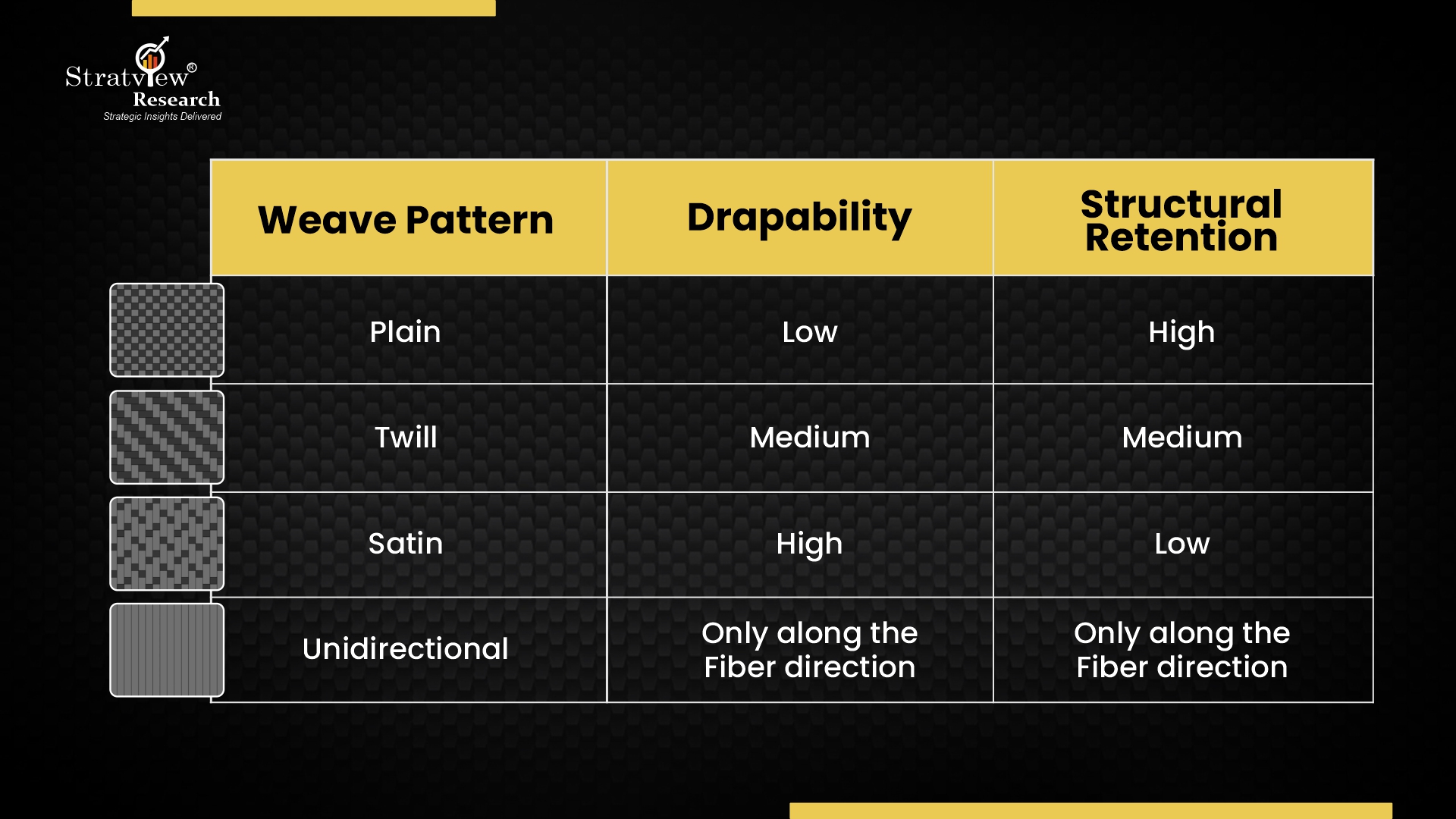
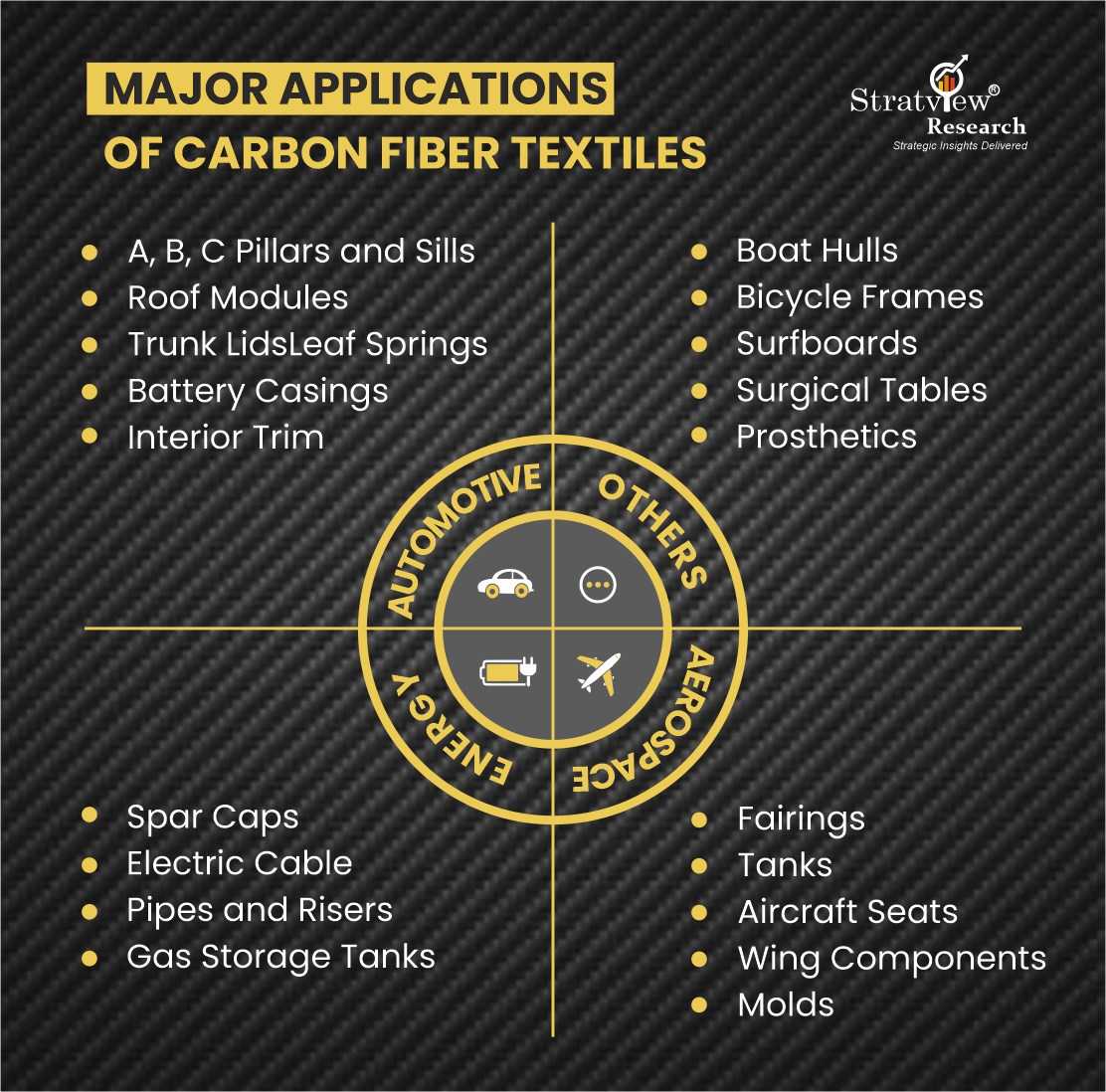
Fig 1. Major Applications of Carbon Fiber Textiles Across Automotive, Aerospace, Energy, and Industrial Sectors
Since the spectrum of CF textile applications encompasses every industry that has lightweighting as a key design specification, the demand is already multifocal. According to Stratview Research, in terms of volume, the wind, transportation, and aerospace industries are the top demand generators for CF textiles globally, with the wind sector currently accounting for ~35% of the demand.
Lighter parts generating heavy demand across the industries:
The
increasing need for CF textiles in the wind industry is primarily being driven
by the increasing size of turbine blades. With the continuous increase in wind
energy capacity globally, the average diameter of an onshore wind turbine has
increased from 126 meters (5 MW) in 2010, to 220 meters (10 MW) in 2023. For
offshore turbines too, an increase of similar proportions has been observed.
For the
majority of blade manufacturers, the penetration of CF is currently limited to
spar caps only, and only a handful of players like Vestas Wind Systems and GE
Wind have used it for other blade components. Incorporating CF spar caps alone
makes turbine blades ~25% lighter as compared to the traditional glass fiber
and also provides the necessary stiffness that is required in longer blades. <30%
of the currently installed global wind capacity uses CF spar caps according to
a study and the share of CF spar caps varies
largely with the length of the blade. ~10% of the installed < 50-metre length
blades are said to have CF spar caps but for >= 70-metre length blades, the
share of CF spar caps is ~60%.
Though the
current overall percentage of turbines that incorporate CF spar caps is low,
the demand for CF textiles from the wind energy sector is still going to be
huge since according to GWEC, ~791 GW of new capacity is likely to be added in
the next five years globally, which translates to ~43,000 installations and
most of which will be 220-280 meters in diameter (10-18 MW) each.
The
automotive industry too, with a varied application portfolio of CF textiles
stretching from exterior components like roof modules to auxiliary internal
structures like battery casings, and with an annual growth rate of 2-3% in
vehicle sales, is expected to produce 90 million+ units from 2025 onwards, and
thus acting as another huge source of demand for CF textiles.
A similar
scenario can be seen in the aerospace industry as well, where giants like
Airbus have anticipated a global demand of ~42,000 aircraft in the next 20
years. Fairings, seats, wing components, and molds comprise some of the ideal
applications of CF textiles in aerospace. Additionally, almost all modern
commercial aircraft models comprise at least 50% composite material by weight,
and thus an increase in the fleet size will naturally generate a huge demand
for CF textiles. It must also be noted that in terms of value, the aerospace
industry is the biggest market for CF textiles despite a lower demand than wind
since aerospace-grade CF is the costliest.
With all the
top three demand-generating industries observing a positive trend, combined
with additional demand from industries like sporting goods, construction,
marine, etc.; a demand for ~85 million lbs of CF textiles is expected to
be generated globally in 2030 according to a report from Stratview Research.
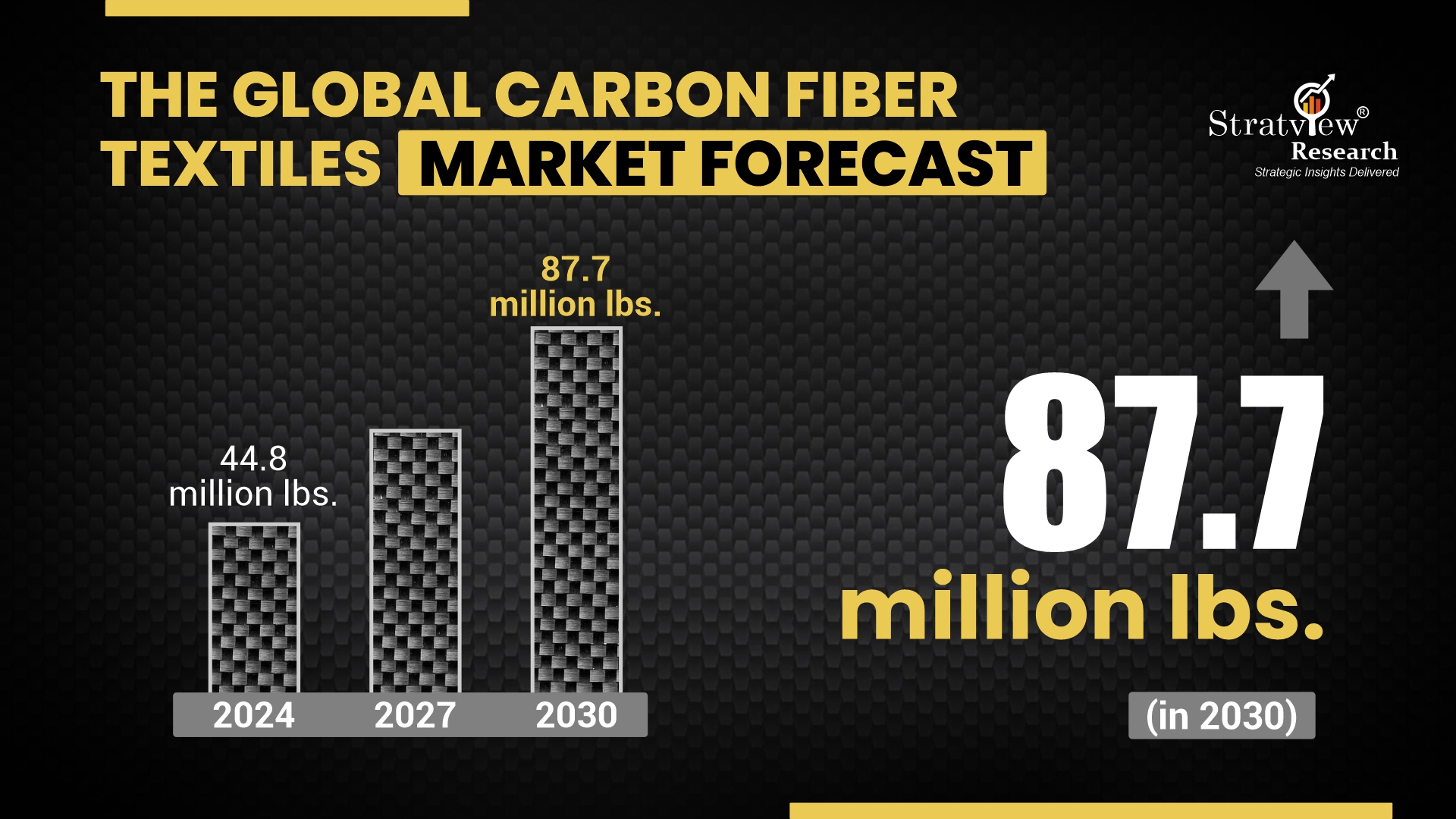
Fig 2. Global Carbon Fiber Textiles Market Forecast to Reach 87.7 Million lbs by 2030
Of the
expected 43,000 aircraft deliveries by 2043, ~9,000 units are expected to be
delivered to the PRC alone, and of the projected onshore wind power
installations over the next 5 years, ~50% of the capacity is expected to be
installed in the People’s Republic of China. Not to mention, in terms of
automobile production, the PRC already is at the top. Thus, it can be safely
concluded that the majority of the global demand for CF textiles in the next 5
years will be concentrated around the APAC region, with Europe being the second
in line, mainly driven by its high-volume wind capacity installations.
A Crimp-Free Future?
As fabrics
continue to find applications in more stress-intensive environments, the
performance expectations will also increase eventually and a transition will
slowly be made towards fabrics that can exhibit load tolerance in multiple
directions.
The solution
already exists in the form of multiaxial or non-crimp fabrics but the adoption
pace is currently slow since the need to make a material switch is not
immediate in any application.
The demand
for CF textiles will be ceaseless since across all the industries that
currently incorporate composites, the penetration is expected to increase
further only. Since a sufficient visible demand is already in place, the next
big goal for the industry should be to overcome the ‘carbon fiber shortage’
that the entire industry has been anticipating. Another big concern for the
industry at this point should be to attain circularity of materials since as
the demand increases, so will the waste produced during production.
It is
estimated that 30% of the material gets wasted during composite part
fabrication and employing recycling methods at this point, could solve both the
circularity as well as the anticipated shortage issue. According to a recent report,
~40 kilotons of CF waste will come out of factories globally, by the end of
2024, and less than 20% of that waste gets recycled.
Thus, while
the demand for CF textiles is expected to maintain an upward trajectory for at
least the next decade, the industry must prioritize achieving circularity by
implementing effective recycling methods and address both the material shortage
and the waste management challenges that will inevitably arise with increased
production.